How to Clean a Concrete Pool Deck: Expert Tips
Share this Article:
A concrete pool deck is constantly exposed to water, foot traffic, dirt, and outdoor elements. Over time, these conditions can lead to stains, discoloration, algae growth, and slippery surfaces that affect both appearance and safety. Regular cleaning helps remove buildup before it becomes a larger problem and can help extend the life of your concrete.
The best approach is to remove loose debris, use a concrete-safe cleaner, address stains promptly, and rinse the surface thoroughly. Consistent maintenance, along with proper sealing, can help keep a pool deck looking clean and performing well for years.
What Causes Pool Decks to Get Dirty?
Concrete pool decks are exposed to water, weather, foot traffic, and everyday outdoor activities, all of which contribute to surface buildup and staining.
Moisture is one of the most common causes of a dirty pool deck. Frequent splashing and damp conditions can encourage algae, mold, and mildew growth, especially in shaded areas or spots with poor drainage.
Pool chemicals and minerals in the water may leave behind residue or discoloration over time. Rust stains can also develop from metal furniture, equipment, or other objects left on the surface.
In addition, food spills, beverages, sunscreen, oils, leaves, and grass clippings can all stain concrete if they are not removed promptly. Regular cleaning helps prevent these materials from building up and keeps the pool area looking its best.
Prepare Your Cleaning Tools and Supplies
Before cleaning your pool deck, gather the supplies you'll need to safely remove dirt, stains, and organic growth. Using products designed for concrete can help you achieve better results while avoiding unnecessary surface damage.
For most cleaning jobs, you'll need:
- A broom or leaf blower
- A garden hose with a spray nozzle
- A concrete-safe cleaner
- A stiff-bristle brush
- A bucket for mixing cleaning solutions
- Protective gloves and eye protection
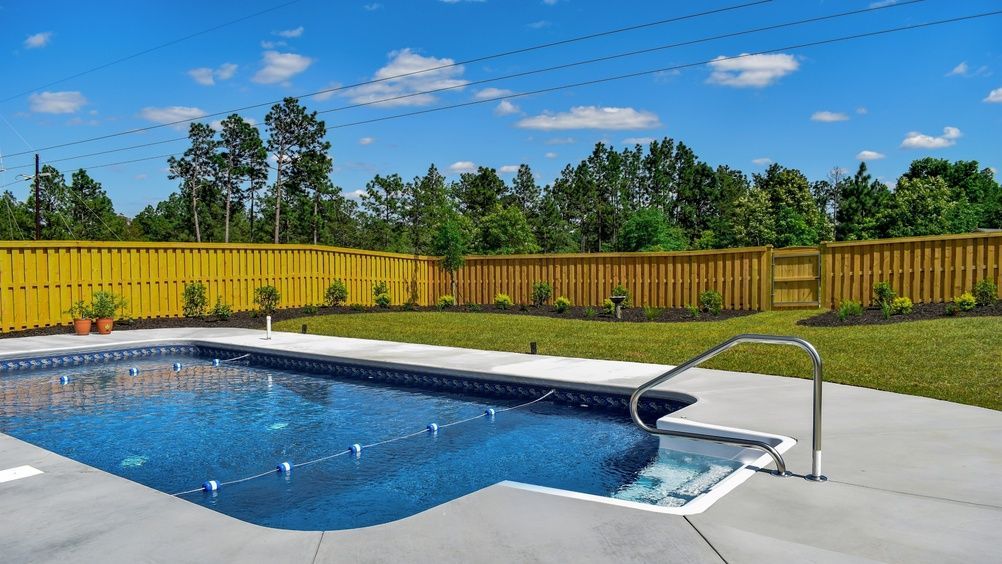
A pressure washer can also be useful for removing stubborn buildup, but it should be used carefully to avoid damaging the concrete surface. If your pool deck has decorative finishes, colored concrete, or stamped concrete, always follow the cleaner manufacturer's recommendations and test products in a small area first.
Having the right tools on hand makes the cleaning process more efficient and helps ensure a thorough result.
Steps to Cleaning a Concrete Pool Deck
A simple cleaning routine can help remove buildup, improve safety, and keep your pool deck looking its best.
1. Clear the Deck and Sweep It Off
Move furniture, planters, and pool toys off the deck first. Pay attention to anything metal, since that's where rust stains usually start. Then sweep or blow off leaves, dirt, and grass clippings, directing debris away from the pool so you're not fishing it out of the water later.
2. Pick the Right Cleaner for the Job
For everyday dirt and grime, a mild dish soap mixed with warm water works fine. For algae, mold, and mildew, an oxygen bleach cleaner is a good choice, since it's tough on organic growth but gentler on concrete and nearby plants than chlorine bleach. Steer clear of acid-based cleaners unless a stain truly calls for one. Acids can etch the surface, fade colored concrete, and break down sealer. If your deck is stamped, colored, or sealed, test any cleaner in a small, out-of-the-way spot first.
3. Work in the Shade or on a Cloudy Day
Cleaner that dries on hot concrete can leave streaks or residue. Clean in the morning, evening, or on an overcast day. Wet the deck down first and work in sections so the cleaner stays damp while it sits.
4. Scrub the Problem Areas
Use a stiff nylon-bristle brush, never a wire brush, on stained or heavily soiled spots. Shaded corners, low spots where water sits, and areas under furniture usually need the most attention. Stubborn stains may take a second round.
5. Rinse Thoroughly, and Away from the Pool
Rinse the whole deck with a garden hose, working toward the drains or the yard rather than the pool. Cleaning residue in the pool can throw off your water chemistry. If you use a pressure washer, use a wide fan tip, keep the wand moving, and hold it a foot or more from the surface. Stamped and decorative finishes call for lower pressure, since too much can wear the texture and damage the sealer.
6. Let It Dry and Take a Look
Let the deck dry completely before putting furniture back. This is also a good time to check for cracks, low spots where water collects, or areas where the sealer looks worn. If your deck no longer beads water, it's probably time to reseal.
Common Pool Deck Stains to Watch For
Not all pool deck stains have the same cause. Identifying the source can help determine the most effective cleaning method.
Algae, Mold, and Mildew
Look for green, black, or dark patches in shaded spots or where water sits. Besides looking bad, they make the deck slippery. Apply an oxygen bleach cleaner, let it sit for 10–15 minutes, scrub with a nylon brush, and rinse. If the same spots keep coming back, look for standing water or heavy shade, since those are usually the real cause.
Rust and Mineral Deposits
Orange rust stains usually come from metal furniture or equipment. Use a rust remover made for concrete and test it in a hidden spot first, especially on colored concrete. White, chalky residue is usually from hard water or pool chemicals. Try a dry scrub and a rinse first, then a mineral deposit cleaner if it won't budge.
Food, Beverage, and Sunscreen Stains
Sunscreen, body oils, and greasy food can leave dark spots that soak in fast. For fresh spills, blot them up and sprinkle an absorbent like cat litter to pull the oil out. For set-in stains, scrub with dish soap or a concrete degreaser and warm water, then rinse. The sooner you get to it, the easier it comes out.
Expert Pool Deck Cleaning Tips
A few best practices can help you clean your pool deck more effectively while reducing unnecessary wear on the concrete.
Clean Before You Close the Pool
Don't let leaves, algae, and grime sit on the deck all winter. Give it a full cleaning when you close the pool so moisture and organic buildup aren't working on the concrete through months of freeze-thaw.
Skip the Rock Salt in Winter
If you clear snow from your pool deck, avoid deicing salt. Salt breaks down concrete over time. A shovel and a little patience are much easier on the surface.
Protect Your Pool Deck With Sealer
Sealing is one of the best ways to protect a concrete pool deck. A quality sealer helps keep out moisture, stains, and pool chemicals, and it makes routine cleaning a lot easier. At
Crossroads Concrete, we recommend sealing all concrete, including pool decks. Since pool decks get wet, ask about adding a slip-resistant additive to the sealer for better footing.
Request an Estimate for Your Concrete Project
Keeping a concrete pool deck clean is an important part of protecting its appearance and longevity. Regular maintenance, prompt stain removal, and proper sealing can help your concrete withstand years of exposure to water, weather, and daily use.
If you're considering a new
pool deck,
decorative concrete,
patio,
driveway, or another concrete project, our team is here to help. We take the time to understand your goals, discuss your options, and create a solution that fits your property and budget.
Give us a call or
request an estimate through our website today to get started.