How Thick Should My Concrete Driveway Be?
Share this Article:
If you're planning a new driveway, one of the first questions that comes up is how thick the concrete should be. For most homes, the answer falls somewhere between 4 and 6 inches, but the right thickness depends on how the driveway will be used and the weight it needs to support.
A durable driveway involves more than slab thickness alone. The foundation beneath the concrete, reinforcement, joint placement, and proper curing all contribute to long-term performance. Taking these factors into account helps create a driveway built for years of everyday use.
What Most Home Driveways Need
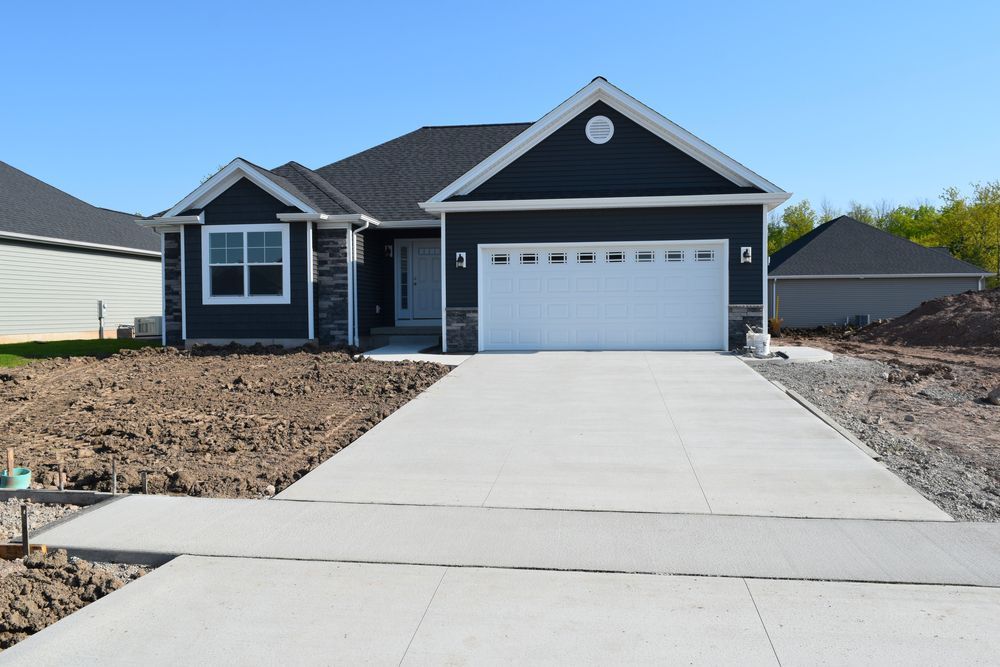
Most residential driveways are poured 4 inches thick, which is suitable for everyday passenger vehicles when the concrete is placed over a properly prepared base. This thickness provides a strong, durable surface for normal daily use.
Some driveways benefit from a thicker slab. Homes that regularly support pickup trucks, work vehicles, campers, or other heavy loads may require 5 or 6 inches of concrete to better handle the extra weight. The best choice depends on how the driveway will be used, which is why every project should be evaluated before construction begins.
Breaking Down Concrete Driveway Thickness by Vehicle
The vehicles that use your driveway have a major impact on the recommended slab thickness. A driveway used only for passenger cars has different needs than one that regularly supports heavy trucks or commercial vehicles. Matching the concrete thickness to the expected load can help improve long-term performance and reduce unnecessary wear.
Cars and Small Crossovers
For driveways used primarily by cars, sedans, and small crossovers, a 4-inch concrete slab is typically sufficient. When paired with a properly prepared base, this thickness provides the strength needed for normal daily traffic.
SUVs and Minivans
SUVs and minivans place more weight on a driveway than smaller passenger vehicles, but a 4-inch slab is often still appropriate for residential use. If heavier vehicles are expected on a regular basis, increasing the thickness may be worth considering.
Pickup Trucks and Work Vehicles
Pickup trucks, large SUVs, work vans, and other heavier vehicles place greater stress on concrete. In many cases, a 5- or 6-inch slab provides added strength to better support these loads over time. If the driveway will regularly carry heavy vehicles or equipment, discussing those details during the planning stage can help determine the right thickness for the project.
Four, Five, or Six Inches: Which Fits?
While 4 inches is common for many residential driveways, it is not the right choice for every property. The ideal thickness depends on the expected traffic, the weight of the vehicles, and the conditions at the job site. Looking at the full picture helps determine the best fit before construction begins.
Reinforcement Options for Concrete Slabs
Reinforcement can help a concrete driveway handle stress, control cracking, and perform well over time. Depending on the expected vehicle loads and project conditions, fibers, rebar, or wire mesh may be used to provide additional support. Each option works a little differently, so the right choice depends on the specific needs of the driveway.
Fibers
Synthetic fibers are mixed into the concrete before it is poured. They help reduce shrinkage cracking during the curing process and improve the slab's overall durability. Fibers are commonly used in residential driveways, though they do not replace proper slab thickness or additional reinforcement when heavier loads are expected.
Rebar
Rebar consists of steel bars placed inside the concrete to increase its strength. It helps distribute the weight of heavier vehicles across the slab and is often recommended for driveways that experience frequent traffic from pickups, work vehicles, or other heavier loads.
Wire Mesh
Wire mesh is another reinforcement option that helps hold the concrete together if small cracks develop over time. When installed properly, it can improve the slab's performance, although it generally provides less structural strength than rebar for driveways that carry heavier vehicles. The right reinforcement depends on how the driveway will be used.
What Supports a Long-Lasting Driveway?
A durable driveway depends on more than concrete thickness alone. Proper site preparation, quality materials, and careful installation all play a role in how the slab performs over time. Paying attention to these details can help reduce premature wear and give your driveway a longer service life.
A Solid Base Supports the Slab
Every driveway starts with the ground beneath it. A stable, well-compacted base helps the concrete carry weight evenly and reduces the risk of settling or uneven areas. Poor base preparation can lead to cracks and other issues, even if the slab is the right thickness.
Joint Layout Helps Control Cracking
Concrete naturally expands, contracts, and develops small cracks over time. Control joints create planned locations for that movement, helping cracks form in less noticeable areas instead of spreading randomly across the surface. Proper joint placement is an important part of every driveway installation.
Curing and Sealing Protect the Driveway
Fresh concrete needs time to cure so it can reach its intended strength. After the curing process, sealing the driveway helps protect the surface from moisture, deicing salts, and everyday wear. Periodic resealing can help
maintain the driveway's appearance and extend its lifespan.
Mistakes That Lead to Early Driveway Damage
Some driveway problems begin long before the concrete has a chance to age. A slab that is too thin for the expected traffic, poor base preparation, or improper joint placement can all shorten the life of a driveway.
Skipping the curing process or neglecting to seal the concrete can also leave the surface more vulnerable to moisture, deicing salts, and everyday wear. Taking the time to plan the project correctly and using the right materials from the start can help prevent many of these common issues.

Request a Concrete Driveway Estimate Today
Choosing the right driveway thickness starts with understanding how the space will be used. Vehicle weight, site conditions, reinforcement, and base preparation all influence the best approach for your project.
Crossroads Concrete takes time to discuss your goals, answer your questions, and recommend a driveway built for your property and daily use. If you're planning a
new concrete driveway in Central Illinois,
give us a call or request an estimate through our website today.